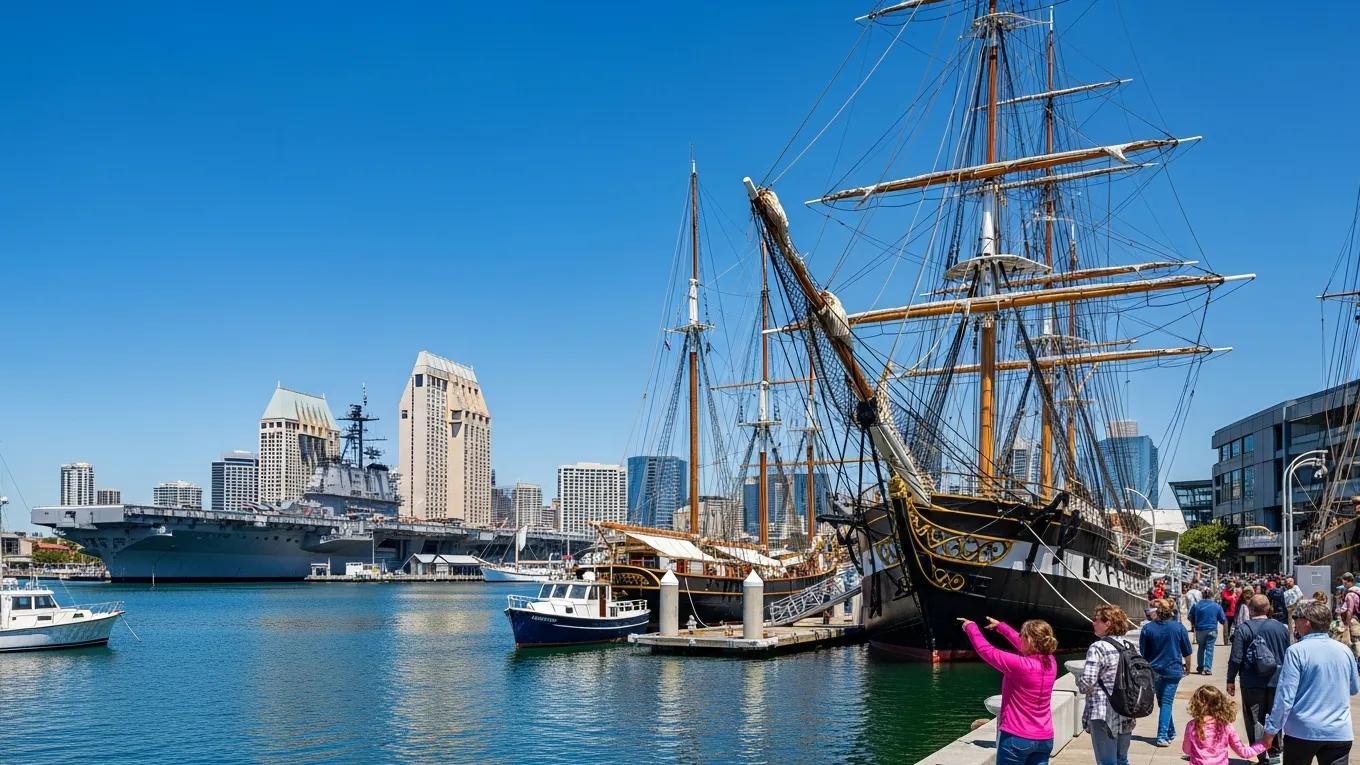
Explore the Maritime Museum of San Diego: Your Guide to Waterfront Wonders
By Filip Lazarevski, San Diego Free Tour
The Maritime Museum of San Diego stands as a testament to the rich maritime history of the region, offering visitors an immersive experience that combines education and adventure. This guide will delve into the museum’s unique attractions, including its historic ships and exhibits, while also highlighting the vibrant waterfront that surrounds it. Visitors often seek engaging ways to explore San Diego’s maritime heritage, and this museum provides a perfect solution through its diverse offerings. In this article, we will explore the museum’s significance, the historic ships on display, the free walking tours available, and tips for enhancing your visit. Key topics include the museum’s location, the iconic Star of India, and how to make the most of your time at this waterfront wonder.
Indeed, maritime museums worldwide are recognized for their vital role in offering educational programs and showcasing historic ship exhibits to thousands of visitors annually.
Maritime Museums: Educational Programs & Historic Ship Exhibits
Thousands of tourists visit theVasa(www.vasamuseet.se/lankar/links.html),Mary Rose(England) (www.maryrose.org), andRoskilde(Denmark and Norway) ships (vikingskipshuset@iakn.uio.no) each year, while hundreds of tourists veer off the beaten path to see the reconstructed hull of the fourth-century Kyrenia merchantman on the island of Cypress, and the reconstructed stern of the Dutch East Indiaman,Batavia, in Freemantle (Australia) (www.ma.wa.gov.au/Museum/ march/hartog/hartog-intro.htm). All of these archaeological finds are on exhibit for the world to see and a number of fine educational programs are presented by the host institutions. The fact that underwater archaeologists have always sought out a public forum for our endeavors may explain why 98 percent of the world’s maritime museums have underwater archaeologists on staff. The encouragement is that alternative educational programming is one of a number of global trends that have spurred new innovative educational programs for archaeology.
Education: The power tool of underwater archaeology, 2002
What Makes the Maritime Museum of San Diego a Must-Visit Waterfront Attraction?
The Maritime Museum of San Diego is a must-visit destination for anyone interested in maritime history and culture. With its rich collection of historic ships and immersive experiences, the museum offers a unique glimpse into the past. Located near other cultural attractions, it serves as a central hub for visitors exploring the San Diego waterfront. The museum not only showcases the significance of maritime history but also provides educational opportunities for all ages.
Where is the Maritime Museum located on the San Diego Waterfront?
The Maritime Museum is conveniently situated along the San Diego waterfront, adjacent to the USS Midway Museum and the iconic Unconditional Surrender statue. This prime location allows visitors to easily access the museum from popular areas such as the Gaslamp Quarter. The scenic views of the harbor enhance the overall experience, making it a perfect starting point for a day of exploration.
How does the museum showcase San Diego’s maritime history?
The museum showcases San Diego’s maritime history through a variety of exhibits and historic ships. Visitors can explore educational displays that highlight the significance of maritime trade, naval history, and the evolution of shipbuilding. Notable exhibits include the Unconditional Surrender statue, which commemorates the end of World War II, and various interactive displays that engage visitors of all ages. The museum’s commitment to preserving and presenting maritime heritage makes it a vital cultural attraction in San Diego.
The integration of interactive displays aligns with broader efforts to enhance visitor engagement and educational experiences in cultural heritage institutions.
Enhancing Maritime Museum Visitor Experience with Interactive Storytelling
Museums play the role of intermediary between cultural heritage and visitors, and are often described as places and environments for education and enjoyment. The European Union also encourages innovative uses of museums to support education through the cultural heritage resources. However, the importance of visitors’ active role in museums as places for education and entertainment, on the one hand, and the growing and indispensable presence of technology in the cultural heritage domain, on the other hand, provided the initial ideas to develop the research. This thesis, presents the study and design for an interactive storytelling installation for a maritime museum. The installation is designed to integrate different museum artefacts into the storytelling system to enrich the visitors experience through tangible storytelling.
Interactive Experience Design: Integrated and Tangible Storytelling with Maritime Museum Artefacts, 2022
Which Historic Sailing Ships Can You Discover at the Maritime Museum?
The Maritime Museum of San Diego is home to several historic sailing ships, each with its own unique story and significance. These vessels not only represent the maritime heritage of San Diego but also provide visitors with an opportunity to step back in time and experience life at sea.
What are the key features of the Star of India and other historic ships?
The Star of India, launched in 1863, is the crown jewel of the museum’s collection. This historic ship is notable for being the oldest active sailing ship in the world that is still sailing under its own power. Visitors can explore its decks and learn about its storied past, including its voyages around the globe. Other significant ships in the collection include the HMS Surprise, a replica of a Royal Navy frigate, and the Californian, a tall ship that offers sailing experiences. Each vessel features unique characteristics that reflect the maritime history of the region.
How do these ships reflect San Diego’s maritime heritage?
These historic ships serve as floating museums that embody San Diego’s rich maritime heritage. They illustrate the evolution of ship design and the importance of maritime trade in the region’s development. By preserving these vessels, the museum not only honors the past but also educates future generations about the significance of maritime culture in San Diego. Visitors can gain insights into the daily lives of sailors and the challenges they faced at sea.
This commitment to preservation and education reflects a global trend where historic vessels are maintained as working museums, offering continuous educational programming and exhibitions.
Historic Ship Museums: Preserving Vessels for Education
continuous use of the vessel via programming, exhibition, and collections. To ensure that practice ever since historic vessels have been preserved as working vessels and museums.
Continuous Existence of Historic Ship Museums: Valuing Educational Opportunities over a Defined Period of Significance, 2017
How Can You Experience Free Walking Tours of San Diego’s Waterfront and Maritime Museum?
Free walking tours of San Diego’s waterfront and the Maritime Museum offer an excellent way to explore the area while learning about its history. These tours are designed to provide visitors with a comprehensive overview of the waterfront’s cultural significance and the museum’s offerings.
What is the pay-as-you-wish model for San Diego Free Tours?
The San Diego Free Tours operate on a pay-as-you-wish model, allowing participants to contribute based on their experience. This flexible approach encourages visitors to enjoy the tours without financial constraints, making it accessible to everyone. The model also fosters a sense of community, as participants can share their experiences and support the guides who provide valuable insights into the area’s history.
How to book and prepare for a free walking tour of the waterfront?
Booking a free walking tour is simple and can be done online or in person at designated meeting points. Visitors are encouraged to arrive a few minutes early to ensure a smooth start. It’s advisable to wear comfortable shoes and bring water, as the tours often involve walking along the scenic waterfront. Additionally, participants should be prepared for varying weather conditions, as San Diego’s climate can change throughout the day.
What Other Waterfront Attractions Complement Your Visit to the Maritime Museum?
San Diego’s waterfront is home to a variety of attractions that complement a visit to the Maritime Museum. From cultural landmarks to recreational areas, there is something for everyone to enjoy.
Which nearby sites highlight San Diego’s harbor and cultural history?
Nearby attractions include the USS Midway Museum, which offers a fascinating look at naval aviation history, and Seaport Village, a charming shopping and dining destination. The Gaslamp Quarter, known for its vibrant nightlife and historic architecture, is also within walking distance. Each of these sites contributes to the rich tapestry of San Diego’s harbor and cultural history, making them worthwhile stops during your visit.
How to plan a full day exploring San Diego’s waterfront attractions?
To make the most of your day exploring San Diego’s waterfront, consider starting at the Maritime Museum and then visiting the USS Midway Museum. Afterward, take a leisurely stroll through Seaport Village for lunch and shopping. Finally, wrap up your day with a visit to the Gaslamp Quarter for dinner and entertainment. This itinerary allows you to experience the best of San Diego’s waterfront attractions while immersing yourself in the city’s rich history.
What Visitor Tips Enhance Your Experience at the Maritime Museum and Tours?
To enhance your visit to the Maritime Museum and the surrounding waterfront, consider these helpful tips that can make your experience more enjoyable.
What are the best times to visit and tour the museum and ships?
The best times to visit the Maritime Museum are during weekdays, particularly in the morning when crowds are smaller. Early visits allow for a more intimate experience with the exhibits and ships. Additionally, consider visiting during the off-peak season, typically in the fall and winter months, to avoid large tourist crowds.
How to make the most of your visit with family or on a budget?
Families can maximize their visit by taking advantage of the museum’s family-friendly programs and activities. Look for special events or workshops that cater to children and provide hands-on learning experiences. For budget-conscious visitors, consider packing a picnic to enjoy at one of the nearby parks, allowing for a full day of exploration without overspending. Engaging with the museum’s staff and volunteers can also provide valuable insights and enhance the overall experience.


Leave a Reply